A diode is a device that allows electric current to flow in one direction only. There is usually a visible stripe around the end of a diode out of which current can easily flow. Any current forced into that end of the diode experiences a very high resistance such that very little current is allowed to flow.
The voltage drop across a diode is very different for current flowing in one direction than for the other direction. The maximum voltage drop for a silicon diode is about .7 volts for current flowing in the direction that is allowed by the diode. The maximum voltage drop for a germanium diode is about .2 volts for current flowing in the direction that is allowed by the diode. The voltage drop in the opposite direction, for either a silicon or germanium diode, can be much higher, depending on the electro-motive force trying to drive the current.
In an analogy based on hydraulics, a diode is somewhat like a one-way valve. Water can flow through the valve in one direction only. In this analogy, water is like electric charge, the movement of water is like electric current, and water pressure is like electric voltage.


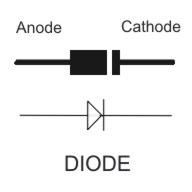 What does a diode do?