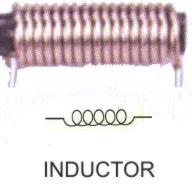
An inductor is an electronic device for storing energy by imparting an inertia to any electric current flowing through it. An inductor is simply a coil of wire that generates a magnetic field as electric current is forced to flow through it by some external electro-motive force. The magnetic field has the effect of encouringing the current to continue to flow, even after the external electro-motive force is removed.
The inertia imparted to an electric current flowing through an inductor can be significant enough to drive voltages very high if the current is disrupted. For example, imagine a circuit in which a large current is flowing through an inductor, but that is broken by an air gap as if a wire was suddenly disconnected. The inductor would produce a very high voltage in an effort to keep the current moving. The voltage might be high enough to force a spark to jump across the air gap, thereby ensuring that the current continues to flow through the inductor just long enough to deplete its stored energy. This is how many car engines cause sparks to jump across their spark plugs.
We can imagine an analogy for an inductor based on hydraulics in which water flows into and out of an enclosed water wheel attached to a massive weight. As water is pumped into the system, the water wheel and its associated massive weight begin to turn. The water wheel will continue to turn, by virtue of its massive inertia, and will tend to keep the water moving through it, even after the pump is turned off.


 What does an inductor do?